Event details
Symposium on Future Health Systems: Securing Wellbeing in a Changing World
Public healthcare systems around the world are under growing strain and risk rapidly becoming unsustainable. Ageing populations, the rising prevalence of chronic disease, and the increasing cost of treatments are placing pressure on public finances. Shortages of healthcare workers, frequent outbreaks, climate related disasters and widening social inequalities are further stretching already fragile systems.
At the same time, many national health systems remain oriented around reactive, high-cost models of care. Over the long term, this approach may struggle to deliver care that is affordable, fair and resilient. Addressing these pressures will likely require fundamental changes in how systems are designed, financed and evaluated, alongside a stronger focus on prevention, primary care and innovative models of treatment.
Alongside system level reforms, there is growing interest in whether advances in novel fields such as regenerative medicine could contribute to solutions by reshaping how diseases are treated and managed. While still an emerging field, regenerative approaches raise questions about how future models of care might reduce disease burden, alter care pathways and influence the long-term economics of health systems.
This half-day symposium will gather researchers, clinicians and policymakers to explore challenges and opportunities. It will combine perspectives on health system reform with discussion of innovative scientific approaches with the potential to help shape future health systems that are more sustainable and resilient.
This Advalife Science and Nature Partnerships event will run from 10am-1pm on Tuesday 13 October at the Saïd Business School, University of Oxford. It will feature six expert talks, a panel discussion moderated by a Nature Custom Media editor and a brief update from one of the Nature Portfolio journals. It is run in partnership with The Mila at the Saïd Business School, and is part of the full-day 'Forum on the Art of Medical Science Innovation’ event at the University of Oxford.
Speakers

Professor Angela Russell
University of Oxford
Angela Russell is a Professor of Medicinal Chemistry jointly between the Departments of Chemistry and Pharmacology at the University of Oxford in the United Kingdom. She gained her DPhil in Organic Chemistry in 2004, and in 2007 she was awarded a Research Councils’ UK Fellowship. in 2018 she was promoted to Professor of Medicinal Chemistry.
Her research concerns the discovery and translation of new molecules and mechanisms to manipulate cell fate, particularly for degenerative diseases. She has founded three companies MuOx Ltd (acquired by Summit Therapeutics plc), Oxstem Ltd and Kodiform Therapeutics Ltd to translate her research towards new treatments and clinical trials.
In 2016 she was named as a Rising Star in the UK Biobeat report, which recognized 50 outstanding women entrepreneurs and business leaders for their contributions to global health innovation. Her pioneering work to develop a therapy for Duchenne muscular dystrophy has been recognized through a Harrington Rare Diseases scholarship award in 2020, and the Royal Society of Chemistry's Jeremy Knowles Award in 2024.
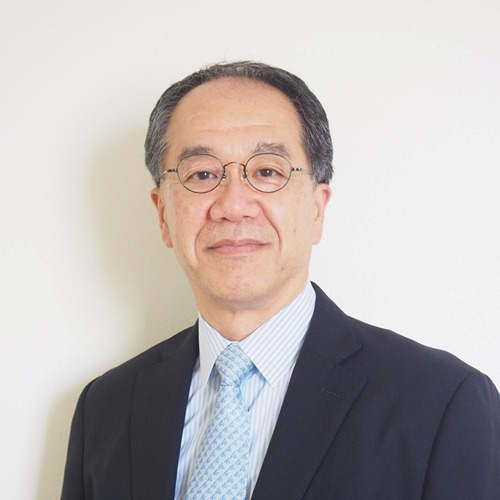
Professor Masakazu Toi
Tokyo Metropolitan Cancer and Infectious Disease Center Komagome Hospital
Throughout his career, Professor Toi has combined clinical practice with research, leading major clinical trials and translational studies focused on the tumour microenvironment, cancer biology and emerging diagnostic and therapeutic approaches. He previously held senior academic and clinical leadership positions at Kyoto University and the Tokyo Metropolitan Cancer and Infectious Disease Center, where he directed departments of surgery and clinical trials.
Professor Toi trained in medicine at Hiroshima University and undertook research training in molecular biology and tumour angiogenesis at the Institute of Molecular Medicine, University of Oxford in the UK. He has also held research appointments at Oxford University and the Dana-Farber Cancer Institute, Harvard Medical School in the US. Beyond his research contributions, he has played a significant role in strengthening university–industry collaboration and healthcare innovation in Japan.
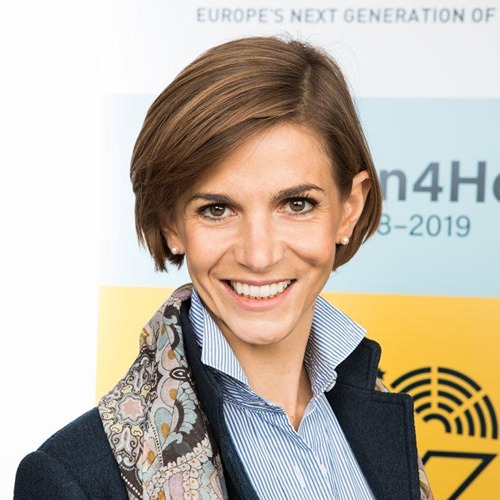
Professor Anna Odone
University of Pavia
Her research focuses on public health, prevention, vaccination policy, digital health and health systems, with particular expertise in infectious disease control and immunization strategies. She has contributed to numerous national and European initiatives, including the European Joint Action on Vaccination (EU-JAV), examining vaccine uptake, immunization policy, public-health interventions and the use of digital technologies to improve population health.
Professor Odone is President of the Digital Health Section of the European Public Health Association (EUPHA) and serves on a range of scientific and policy bodies in public health and healthcare innovation. Trained in medicine, epidemiology and public health in Italy, the United Kingdom and the United States, her work focuses on strengthening prevention and public-health systems to improve population health and the long-term sustainability of healthcare systems.

Professor Christopher Buckley
University of Oxford
His work has helped advance understanding of how fibroblasts and tissue microenvironments contribute to the development and persistence of inflammatory diseases, particularly rheumatoid arthritis and related conditions. Through translational research programmes that bridge laboratory science and clinical medicine, he seeks to identify new ways to improve the diagnosis, prevention and treatment of chronic disease.
Professor Buckley trained in biochemistry and medicine at the University of Oxford and has held a number of senior academic and clinical leadership positions in Oxford and Birmingham. His current research explores the biological processes that underpin chronic disease burden and investigates how a deeper understanding of disease mechanisms can lead to more precise and effective approaches to patient care.
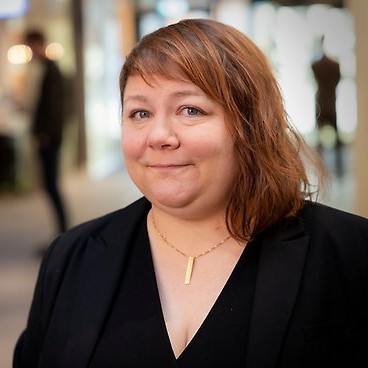
Professor Maria Hägglund
Uppsala University
Her research has focused on user-centred systems that support collaboration and patient empowerment. As a member of the DOME research consortium, she has explored the impact of patients’ access to their electronic health records (including notes) through the national Swedish patient portal.
She leads the PATH — the Participatory eHealth and Health Data research group — and several major research projects. As the Chair of the Swedish Medical Informatics Association, she represented Sweden in the International Medical Informatics Association (IMIA) general assembly 2020-2022. Maria also chairs the EFMI Working Group on ‘Citizen Health Data’.
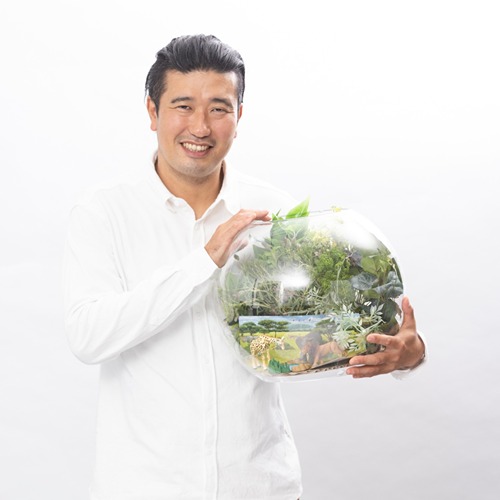
Dr Masatoshi Funabashi
Sony Computer Science Laboratories and Kyoto University
Originally trained in veterinary medicine and complexity science, Dr Funabashi received a PhD in Physics from École Polytechnique in France. His research focuses on complex systems spanning ecosystems, food systems, health and society, with a particular interest in the relationships between biodiversity, human wellbeing and long-term sustainability. He introduced the concept of Human Augmentation of Ecosystems, exploring biodiversity-based approaches that seek to address food production, environmental regeneration and human health simultaneously.
His current work examines how ecological, social and metabolic systems interact, and how these connections can inform more sustainable futures. Through research and field initiatives across multiple countries, he investigates how human activities can be redesigned to strengthen the ecological and social conditions that underpin health, resilience and planetary sustainability.

John Pickrell
Host and Moderator
Nature Custom Media

Dr Charlotte Payne
Nature Human Behaviour
In partnership with